From Greek: pyr (πῦρ) = fire + lysis (λύσις) = breaking apart
Waste Plastic
Waste Tyres
Biomass
Pyrolysis Oil
Syngas
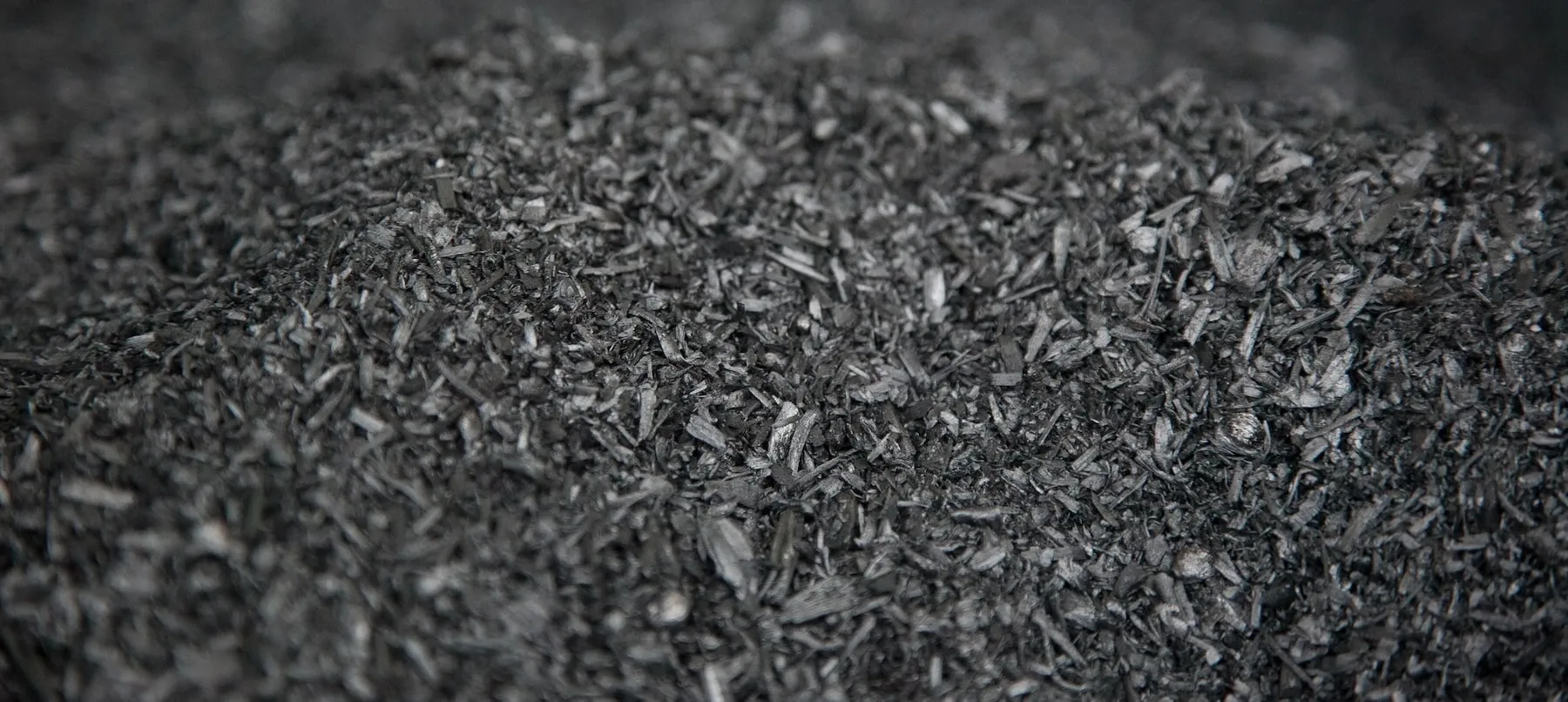
Char / Carbon Black
Legend
How Does Pyrolysis Work?
Unlike incineration, pyrolysis operates in an oxygen-free environment. Instead of burning, the feedstock's long-chain molecules are thermally cracked into shorter, commercially valuable products. The process follows five steps:

-
Feedstock Preparation
Raw material (plastic, tyres, or biomass) is collected, sorted, and shredded to a uniform size. Metals and inert contaminants are removed. For biomass, moisture content is reduced through drying.
-
Oxygen-Free Heating
The prepared feedstock enters a sealed reactor and is heated to 300-700 °C. Since no oxygen is present, the material does not combust — it thermally decomposes, breaking molecular bonds.
-
Thermal Decomposition
Long-chain polymers and complex organic molecules crack into shorter chains. This produces a mixture of hot vapours (condensable and non-condensable gases) and a solid carbon-rich residue (char).
-
Condensation & Separation
Hot vapours pass through a condensation system. Condensable fractions cool into pyrolysis oil (a liquid hydrocarbon mixture). Non-condensable gases remain as syngas. Solid char is collected from the reactor.
-
Product Collection & Use
Three products are collected: pyrolysis oil (fuel or chemical feedstock), syngas (often recycled to heat the reactor, making the process self-sustaining), and char (used as carbon black, soil amendment, or solid fuel).

Why Pyrolysis Is Not One Technology
Understanding how pyrolysis works is the starting point, not the finish line. In the video below, APChemi founder and CEO Suhas Dixit explains why a working pyrolysis plant is really a combination of 15 to 20 smaller technology packages, and why treating pyrolysis as a single technology is, in his estimate, behind around $2 billion of lost pyrolysis investment in Europe and the USA.

The packages fall into four stages. Each one is a separate piece of engineering, and each has to be matched to the others for the plant to run:
Prepare and feed the raw material
- Shredding to bring the material to the required size.
- Drying for plastic and biomass (tyres usually do not need it).
- Conveying the prepared material to the reactor.
- Airlock feeding so the reactor stays sealed while it is fed.
Reactor and furnace
- Reactor system with shaft seals and augers, or a rotary kiln in some designs.
- Furnace that heats the reactor evenly so it does not bend, buckle or crack.
- The furnace, reactor and moving parts must be engineered to work together.
Handle the carbon, vapours and gas
- Carbon: airlock discharge from the reactor bottom, then continuous cooling so it does not catch fire.
- Vapours: keep the vapour line clear of tar and carbon; condense in stages into heavy, middle and light fractions; keep condensers free of tar and benzoic acid.
- Gas: intermediate storage and burners built for pyrolysis gas (off-the-shelf burners are not available), then flue gas scrubbing and waste heat recovery to dry feedstock or preheat combustion air.
Upgrade the end products
- Pyrolysis oil upgraded to meet the refinery buyer's specification, so plastic pyrolysis oil can go back into new plastics.
- Biochar adjusted to the target soil, or cleaned of contaminants such as silica for metallurgical use.
- Recovered carbon black from tyre pyrolysis, jet-milled and pelletised for new tyre production. Making oil or carbon is not enough.
- technology packages make one pyrolysis plant
- 15-20
- concept vs engineering effort in plant development
- 5% / 95%
- engineering hours per pyrolysis project
- 10,000-30,000
Seeing a skyscraper does not make you an architect. Visiting a few pyrolysis plants gives you the concept, which is about 5% of the job. If one technology package is a weak link, such as a clogged vapour pipeline, the whole plant is at risk.
The 10-slide guide
The same story in ten slides. Swipe or use the arrows; click a slide to open the PDF.


Before you buy equipment, ask three questions: which of the technology packages can you engineer in-house, who will engineer the rest, and who will make all 15 to 20 of them work together as one plant? That coordinating role belongs to an owner's engineer. APChemi provides it through project management consultancy and pyrolysis plant design, combined with plant simulation, backed by 49+ commercial pyrolysis projects.
Read the video transcript
Pyrolysis is not a technology. I have 12 patents in the domain of pyrolysis, and I am still telling you pyrolysis is not a technology. What is the reason for this? Well, two billion dollars of funds have been burnt in pyrolysis investments in Europe and the USA. This is because people think that pyrolysis is a single technology. That is not the case. Actually, a pyrolysis plant is a combination of around 15 different smaller technology packages that make the whole thing work. I am Suhas Dixit. I am the founder and CEO of APChemi. I have more than 15 years of experience in plastic, tyre and biomass pyrolysis.
I have 12 patents, and I have been behind more than 50 commercial-scale plastic, tyre and biomass pyrolysis projects. So let me help you understand why pyrolysis is not a single technology. Let's take the example of a plastic, tyre or biomass pyrolysis plant. When the feedstock comes into the process plant, it first requires size reduction. So you have shredding. After size reduction, other than for tyres, when it comes to plastic and biomass, it requires drying. So that is a dryer. After the dryer, you need a set of conveyors to convey the raw material into the pyrolysis unit.
As far as feeding the raw material into the pyrolysis reactor is concerned, that is the airlock feeding system. Airlock feeding is a separate technology. Then comes the reactor and furnace. The reactor system is a separate technology where shaft seals and augers are involved. Sometimes there are rotary kilns. And the furnace is a different technology, where you need to heat the reactor evenly so that it does not bend, buckle or crack. Not only this, once pyrolysis is complete, you have carbon discharge coming out from the bottom, and that carbon needs to be discharged in an airlock manner.
So that airlock carbon discharge is a separate piece of technology, and cooling that carbon on a continuous basis so that it does not catch fire is a separate technology. As for the pyrolysis vapour that comes out from the top of the reactor, ensuring that the pyrolysis vapour pipeline does not get clogged because of the tar and carbon that come out of the pyrolysis reactor is a separate technology. Condensing the pyrolysis vapours into liquid in a stage-wise manner, so that you are able to collect the heavy fraction, middle fraction and light fraction separately, is a separate technology.
Ensuring that the condensers do not get clogged because of contaminants like tar or benzoic acid in the pyrolysis vapour, that is a separate technology. Taking the pyrolysis gas, having intermediate storage and using it for firing again is a separate technology, because off-the-shelf burners are not available for pyrolysis gas. Not only that, once the firing of the pyrolysis gas is complete in the furnace, you need to scrub the flue gas to ensure environmental compliance. You also need to recover the waste heat, so that you can use it for drying the incoming biomass or plastic, or for preheating the combustion air that goes into the furnace.
So these are different technology packages. Not only that, once you get the end product, the end product needs upgrading. For example, the pyrolysis oil that you get from a pyrolysis plant needs to be upgraded to meet the requirements of the downstream refinery buyer. So plastic pyrolysis oil can be converted into new plastics. If you are producing biochar, the quality of the biochar needs to be modified so that, before it is deployed into agricultural soil, it meets the requirements of that particular soil. If the biochar is going for metallurgical applications, you need to remove contaminants like silica.
So post-processing of pyrolysis end products is three or four separate technology packages. So, as I discussed with you, the pyrolysis industry involves a combination of all these 15 to 20 different technology packages, and for this reason, the fact is that pyrolysis is not a single technology. Let me give you one more nuance of the pyrolysis industry. When you do tyre pyrolysis, people think that the majority of the revenue should come from the tyre pyrolysis oil that they sell in the market.
People who make good money in tyre pyrolysis take that carbon black and convert it into recovered carbon black pellets, so that it can be repurposed into the production of new tyres, which is again a very separate technology. So you need jet milling, and then you need pelletisation. Let me ask you a question. If you see a skyscraper, does it make you an architect? Just by looking at a skyscraper, can you build a skyscraper of your own? No. So why is there this tendency among pyrolysis entrepreneurs to visit a bunch of pyrolysis plants and then design their own pyrolysis plant?
What they are not able to understand is that just because you understand the concept of how the pyrolysis industry works, that is just 5 percent. The remaining 95 percent is sheer engineering effort, of 10,000 to 30,000 engineering hours. You have to go into the details of each technology package. Each of these technology packages is stacked on top of the others, and if one technology package is a weak link, the entire building collapses.
It is very important to understand that you may be able to copy the concept, but the ability to do the engineering and produce a pyrolysis plant that works, in a way that each technology package is nicely stacked on the others and the whole pyrolysis plant runs, is sheer engineering effort. Which of these 15 to 20 technology packages do you have in-house expertise in? One, two, three technology packages? Who is going to look after the remaining 15 to 17 technology packages? Who is going to orchestrate all 15 to 20 technology packages so that your pyrolysis plant runs well? The answer is owner's engineers. I'll have a video coming on this.
Please let us know which of the technology packages you need our help with. You can put your comments below, or you can reach out to us using the link in the description. Thank you.
Pyrolysis by Feedstock Type
Different feedstock materials have distinct molecular structures, which affect how they break down during pyrolysis and what products they yield:
Plastic Waste
Polymers like polyethylene (PE), polypropylene (PP), and polystyrene (PS) consist of long carbon chains. Pyrolysis breaks these into shorter hydrocarbon chains that form pyrolysis oil, which can be refined into diesel, gasoline, or used as a chemical feedstock. This process is also known as chemical recycling — it can handle mixed and contaminated plastics that mechanical recycling cannot. Learn more about plastic pyrolysis →
Waste Tyres
Tyres contain vulcanised rubber (cross-linked with sulfur bridges), carbon black, and steel wire. Pyrolysis breaks the rubber chains and sulfur cross-links, yielding pyrolysis oil (~40-45%), recovered carbon black (~30-35%), syngas (~10-15%), and recoverable steel wire (~10-15%). Learn more about tire pyrolysis →
Biomass
Wood, agricultural residue, and organic waste consist of cellulose, hemicellulose, and lignin — ring-structured natural polymers with oxygen bridges. Pyrolysis breaks these into bio-oil, syngas, and biochar. Biochar is particularly valuable: when returned to soil, it improves water retention, nutrient availability, and sequesters carbon for hundreds of years. Learn more about biomass pyrolysis →

Talk to APChemi
Wondering which pyrolysis process is right for your feedstock? APChemi offers R&D lab testing to determine optimal conditions and expected yields for your specific material.
49+ projects12+ patentsISCC PLUS certified
Types of Pyrolysis
Pyrolysis processes are classified by heating rate, temperature, and residence time. These parameters determine the ratio of oil, gas, and char produced:
| Parameter | Slow Pyrolysis | Fast Pyrolysis | Flash Pyrolysis |
|---|---|---|---|
| Temperature | 300-500 °C | 400-600 °C | 500-1,000 °C |
| Heating rate | 0.1-1 °C/s | 10-200 °C/s | >1,000 °C/s |
| Residence time | Minutes to hours | 0.5-2 seconds | <1 second |
| Primary product | Char (35-40%) | Bio-oil (60-75%) | Syngas (60-80%) |
| Oil yield | 20-30% | 60-75% | 10-20% |
| Gas yield | 20-30% | 10-20% | 60-80% |
| Typical use | Charcoal & biochar production | Bio-oil for fuel & chemicals | Syngas & hydrogen production |
| Common reactors | Batch kilns, auger reactors | Fluidised bed, rotating cone | Entrained flow, drop-tube |
For waste plastic and tyre pyrolysis, most commercial plants operate in the slow-to-moderate range (400-550 °C) to maximise oil yield. Fast pyrolysis is more commonly used for biomass-to-bio-oil conversion. See our guides on continuous pyrolysis and batch pyrolysis for more on reactor types.
Pyrolysis vs. Incineration vs. Gasification
All three are thermal waste treatment processes, but they differ fundamentally in oxygen levels, operating conditions, and outputs:
| Parameter | Pyrolysis | Incineration | Gasification |
|---|---|---|---|
| Oxygen | None (oxygen-free) | Excess (oxygen-rich) | Limited (sub-stoichiometric) |
| Temperature | 300-700 °C | 800-1,000 °C | 700-1,300 °C |
| Reaction type | Endothermic (absorbs heat) | Exothermic (releases heat) | Exothermic (partial oxidation) |
| Primary output | Oil, syngas & char | Heat, CO₂ & ash | Syngas (CO + H₂) |
| Energy recovery | Stored in oil & gas products | Direct heat / steam | Stored in syngas |
| Emissions | Minimal (closed system) | CO₂, NOₓ, SOₓ, dioxins | Low (with gas cleanup) |
| Material recovery | High (oil + char reusable) | Low (ash only) | Moderate (syngas) |
| Circular economy fit | Excellent | Poor | Good |
For a deeper dive into gasification, see our pyrolysis vs gasification comparison.

Applications of Pyrolysis
Pyrolysis technology is deployed across multiple industries, converting waste materials into commercially valuable products:
Plastic Recycling
Chemical recycling of mixed, contaminated, or multi-layer plastics that mechanical recycling cannot process — converting waste plastic back into virgin-grade feedstock.
Fuel Production
Pyrolysis oil from waste tyres and plastics can be used as industrial fuel oil or further refined into diesel, gasoline, and marine fuel via distillation.
Agriculture
Biochar from biomass pyrolysis improves soil structure, retains water and nutrients, and sequesters carbon for centuries when applied as a soil amendment.
Chemical Industry
Pyrolysis oil serves as feedstock for producing ethylene, propylene, and other base chemicals — replacing fossil-derived naphtha in petrochemical plants.
Energy & Power
Syngas produced during pyrolysis can fuel industrial boilers, generators, or be converted to hydrogen. Many plants use syngas to power the reactor itself.
Tyre Recycling
End-of-life tyres yield pyrolysis oil, recovered carbon black (rCB) for rubber manufacturing, steel wire for scrap recycling, and syngas for energy.

Talk to APChemi
Ready to explore pyrolysis for your project? APChemi has designed and delivered 49+ pyrolysis plants across 15+ countries with 12+ patents. Get a free consultation.
49+ projects12+ patentsISCC PLUS certified
Environmental Benefits
Pyrolysis offers significant environmental advantages over traditional waste disposal methods like landfilling and incineration:
Landfill Diversion
Converts waste plastic, tyres, and biomass that would otherwise occupy landfills into reusable products, significantly reducing waste volume.
Lower Emissions than Incineration
Because pyrolysis operates in an oxygen-free, closed system, it produces significantly fewer greenhouse gases, NOₓ, SOₓ, and dioxins compared to incineration.
Carbon Sequestration
Biochar produced from biomass pyrolysis locks carbon in a stable solid form for hundreds to thousands of years. When applied to soil, it actively removes CO₂ from the carbon cycle.
Circular Economy
Pyrolysis enables a closed-loop model — waste materials are converted back into fuels and chemical feedstocks, reducing dependence on virgin fossil resources.
Energy Self-Sufficiency
The syngas produced during pyrolysis can be recycled to heat the reactor, making many commercial pyrolysis plants energy self-sufficient after initial start-up.
Reduced Fossil Fuel Dependence
Each barrel of pyrolysis oil displaces a barrel of crude oil. Pyrolysis-derived fuels are 14-39% less carbon-intensive than traditionally refined petroleum products.
For a comprehensive analysis of the environmental impact of pyrolysis technology, including carbon credit pathways and lifecycle assessment data, see our environmental impact guide.
Pyrolysis directory
Explore Pyrolysis Companies
Discover pyrolysis plant operators, manufacturers, and project developers across the globe.
1508+ Companies
Frequently Asked Questions
Pyrolysis is the thermal decomposition of organic materials at elevated temperatures (300-700 °C) in the absence of oxygen. It breaks down long-chain molecules into three commercially valuable products: pyrolysis oil (40-65% yield), syngas (10-25% yield), and char/biochar (15-40% yield). Unlike incineration, pyrolysis operates in a closed, oxygen-free system with minimal emissions.
There are three main types: Slow pyrolysis (300-500 °C, produces mainly char/biochar at 35-40% yield — ideal for carbon removal), Fast pyrolysis (400-600 °C, maximises bio-oil at 60-75% yield), and Flash pyrolysis (500-1,000 °C, maximises syngas at 60-80% yield). Most commercial plastic and tire pyrolysis plants operate in the slow-to-moderate range (400-550 °C) to maximise oil yield.
Pyrolysis operates in an oxygen-free environment at 300-700 °C and produces reusable products (oil, gas, char). Incineration burns waste with excess oxygen at 800-1,000 °C, producing mainly heat, CO2, and ash. Pyrolysis has minimal emissions and fits a circular economy model, while incineration generates significant greenhouse gases, NOx, SOx, and dioxins. Learn more about the environmental benefits.
Pyrolysis produces three products: Pyrolysis oil (40-65% yield) — used as fuel or refined into diesel and chemical feedstock via distillation; Syngas (10-25% yield) — used for heating the reactor itself or for hydrogen production; and Char/Carbon black (15-40% yield) — used as solid fuel, biochar for soil amendment and carbon sequestration, or recovered carbon black for rubber manufacturing.
Common feedstocks include waste plastics (PE, PP, PS — yielding 60-80% oil), end-of-life tyres (yielding oil, recovered carbon black, steel, and gas), and biomass (wood, agricultural residue, organic waste — yielding bio-oil, syngas, and biochar). Each feedstock type requires specific reactor design and operating parameters. APChemi offers R&D lab testing to determine optimal conditions for your specific feedstock.
Pyrolysis plant costs range from $50,000 for small batch units to $10M+ for large continuous commercial plants. A mid-range continuous plant (10-30 TPD) typically costs $200K-$3M for equipment, with total installed cost 1.5-2.5x that amount. ROI timelines range from 2-5 years depending on feedstock, products, and local market prices. See our detailed cost guide and ROI calculator.
Talk to APChemi
Get a Free Consultation
Tell us about your pyrolysis project and our engineers will get back to you within 24 hours.
49+ projects deliveredISCC PLUS certified17+ years experience